
Utility Vehicles: Moving People & Products Faster

Utility Vehicles: Moving People & Products Faster

It’s a new year and you might be thinking it’s time to take your material handling and distribution center warehouse operations to the next level. New Year’s resolutions can be hard to follow through on, but with the right plan, the right help and the right attitude, you can turn your material handling warehouse into a smooth-flowing machine. There are plenty of ways to start improving your material handling or DC warehouse as we go into the new year. One of those ways is by making the best use of utility, burden and people-mover vehicles.

Upgrading a Warehouse

A smooth-running warehouse is what everyone in the material handling and DC arena wants to see when they look out over the floor. With the tests we’ve all faced over the last few years - starting with and continuing with a major workforce shortage - finding new and inexpensive ways to get product and people from point A to point B in an organized and efficient fashion is at the root of our challenge.

One solution to that challenge is utility vehicles. Utility vehicles come in a relatively inexpensive array of models, designed to meet everyday challenges in a safe manner. Whether you have a minimal operation focused on moving a specialty product line or you’re running a 24-hour application, utility vehicles can help you move product and people faster and more efficiently. Let’s take a look at some of the utility vehicles offered through the Taylor Dunn lines.

Taylor Dunn

With customization available, Taylor Dunn produces vehicles designed to meet the challenges of indoor and outdoor applications including manufacturing and warehousing, public and private institutions, aviation, government and more. Whether you prefer gas- or electric-powered, these vehicles are an inexpensive way to move product, people and supplies.

Personnel Carriers

Whether you need to move a group of people with luggage or two people with briefcases, there is inexpensive, yet reliable, equipment available. At Taylor Dunn, designing people movers to operate in a safe and efficient manner is the standard. With a wide variety of models, including roofed and with sides, you’ll be able to move people in almost every environment.

Utility Vehicles

Choose from a variety of models designed to cover the scope of light-duty to medium-duty to heavy-duty. These vehicles are made with safety and operator ergonomics in mind. With the ability to carry up to 1,000 pounds and tow up to 7,500 pounds (light duty), 2,400 pounds and tow up to 8,400 pounds (medium duty) and up to 3,000 pounds and tow up to 10,000 pounds (heavy duty), whatever your application is, you can find a Taylor Dunn utility vehicle to handle the job.

Stockchasers, Tow Tractors and Industrial Carts

Taylor Dunn offers a wide variety of stock chasers, tow tractors and industrial carts for your material handling and DC warehouse applications. Taylor Dunn understands today’s challenges of operating in narrow and tight spaces and their line of indoor material handling and DC warehouse utility vehicles are built to have a tight turning radius.

Available in gas, diesel or electric, their tow tractors are easy to use, safe and ergonomic for operators and built to last for both industrial and ground support indoor and outdoor applications.
Continue reading
  993 Hits

Five Reasons to Lease vs Buy Forklifts and Material Handling Equipment

Cat Forklift

Let’s face it. Material handling equipment is really expensive. There are plenty of times when you can justify purchasing that new forklift, but there are also times when leasing your material handling and distribution center warehouse equipment will impact the bottom line in a more positive way. How do you know when leasing vs buying material handling equipment is the right choice? Let’s break that down into five situations where leasing comes out on top.

1. Seasonal Work or a One-Off

Some material handling and DC warehouse companies find their business ebbing and flowing in time with the seasons. Let’s say you supply lawn maintenance tools and materials. You’d likely see an uptick in product being moved in and out during the warmer months. Likewise, if you work in the construction industry. Or what about during the colder months? Perhaps your business involves a lot of holiday products. People may be ordering decorations and toys at an increased rate during these months.

For companies that tend to be busier at certain times of the year, hiring that additional labor in the form of leased material handling equipment just makes sense. Why would you commit the immense financial layout for a piece of equipment that might be sitting around unused for part of the year?

Another example of a good reason to think about leasing is if your company is in the construction business - or any other industry that depends on working projects. Having won a bid for a new project that is going to call for a piece of equipment you don’t own means you will need to acquire that material handling equipment before the job starts. Will you buy it or rent it? If you foresee winning many more bids that will call for this specific type of material handling equipment, by all means look at buying. If, however, you are not sure if this job is a one-time thing, leasing probably makes more sense.

At any rate, in both of these circumstances, leasing a piece of material handling equipment buys you some time to decide if you need to make a permanent addition to your material handling fleet.

Continue reading
  1248 Hits

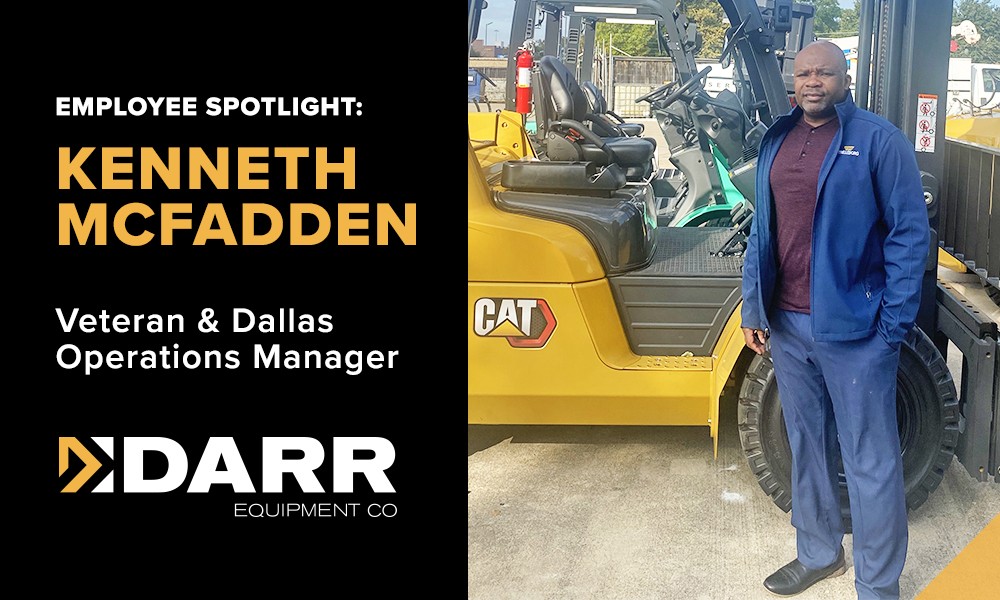
Veterans Day Employee Spotlight: Kenneth McFadden

Darr Employee Spotlight on Kenneth McFadden

Veterans Day is a special day to honor veterans of all wars. At Darr Equipment we would like to thank our American veterans who have served and are proud of those veterans that have come to the Darr family of businesses post their military careers. It is truly a honor and a privilege to have you as part of our team. As part of our tribute this Veterans Day, we have decided to spotlight one of our own veterans, Kenneth McFadden, Dallas Operations Manager, Darr Equipment Company. Here is a little from our interview:

  1421 Hits

How to Reduce Total Cost of Ownership With Forklift Fleet Management

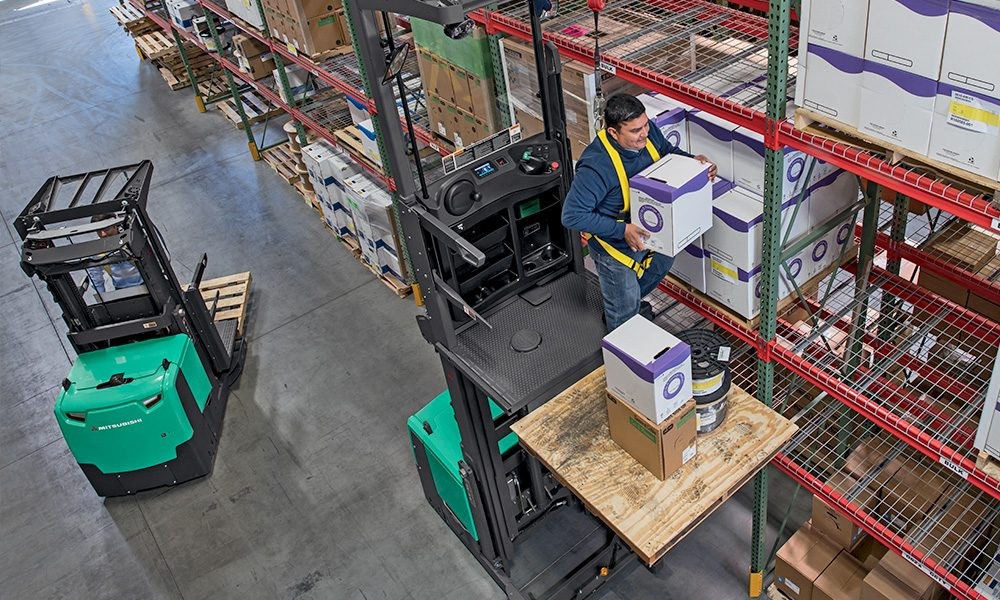
Mitsubishi Narrow Aisle Forklifts

Successful entrepreneurs have many things in common. Besides an excellent work ethic, being willing to take risks and learning how to be persistent, the prosperous business owner knows how to make the best use of a buck. These people are not necessarily book smart, but they make it a goal to learn and understand new things, as well as integrating tried and true business practices into their model. One thing that most people won’t argue about is how smart it is to be on the constant lookout for ways to reduce total cost of ownership (TCO).

What is TCO? TCO is what you pay from the time you acquire an asset to the time it leaves your books - because you sold it, traded it in or it simply reached the end of its useful life. Included in TCO is:

  • Original purchase price, plus tax
  • Employee training
  • Ongoing maintenance
  • Repairs
  • Upgrades and additions
  • Insurance
  • Fuel

And let’s not kid ourselves - in the material handling industry, the equipment you need to purchase is not cheap. Of course, your cost will vary depending on what exactly you buy and whether it is new or used, but when looking at just the workhorse of the warehouse, the forklift, you will be investing plenty. Forklifts are the ubiquitous equipment in the material handling and DC space because a good lift truck can perform a lot of different functions.

So, being open to new ideas as they come into view and learning how to reduce your TCO on your material handling and DC warehouse fleet should be paramount when you look at ways to run your business efficiently and prosperously. But what are some ways you can accomplish this? Let’s take a look at some of the more important ones when assessing your forklift fleet.

Forklift Usage

As we mentioned before, the forklift is the workhorse of the warehouse. This valuable piece of equipment comes in so many forms and variations that there is sure to be something for every application. Whether your operation is indoors, outdoors or both, whether you are consistently moving the same material all the time or your loads vary and whether you are picking product and pallets or working in very narrow aisles and tight spaces, there’s a forklift for the job.

Continue reading
  1354 Hits

Three Reasons Section 179 Might Work For You

darr_Section_179-1

With the huge - and somewhat unexpected - e-commerce boom, many in the material handling and distribution center warehouse space are finding a sudden need to beef up their fleet. With today’s e-commerce expectations - rapid order fulfillment and rapid shipping - you probably have trucks loading and unloading at your warehouse dock constantly.

In order to stay ahead of the traffic and your competition, you need forklifts, reach trucks, order pickers, pallet jacks, utility vehicles and more. If you are making better use of your space by upgrading your warehouse to include narrow aisle solutions, there is specialized equipment for that, too. When contemplating buying expensive equipment, it’s best to research all possible ways to ease the squeeze on your bottom line, including Sec. 179 of the U.S. federal tax code.

Believe it or not, Section 179 of the U.S. federal tax code has been in place since 1958. Because Section 179 includes expensing allowances that tend to disqualify larger businesses, many people feel the code is targeted at medium- to smaller-size interests. What started out as a temporary boost for qualifying businesses, Section 179, designed to increase investment in smaller businesses, while decreasing their tax burden and simplifying their accounting, is now a permanent part of the U.S. tax code.

The Ins and Outs of Section 179

In a nutshell, Section 179 allows qualifying businesses to expense up to $1,050,000 in 2021 of the total cost of qualified new or used depreciable assets it buys or leases and places into service during 2021. For our purposes, we’re going to say that qualified new and used purchases include material handling and DC warehouse equipment and systems, but many items are eligible, including furniture, computer software and more.

Here’s the breakdown of how Section 179 works:

  • Without Section 179, businesses typically write off new purchases a little bit each year as depreciation, until the “useful life” of the asset ends
  • With Section 179, qualifying businesses can write off the entire price of eligible items in the year of purchase (as long as the purchased item is put into service during that year)

So, let’s get to three reasons why Section 179 could benefit you as you boost your material handling and DC warehouse fleet. Later, we’ll talk about limitations and other concerns.

Continue reading
  1044 Hits

Clear A Path To Industrial Floor Cleaning Benefits

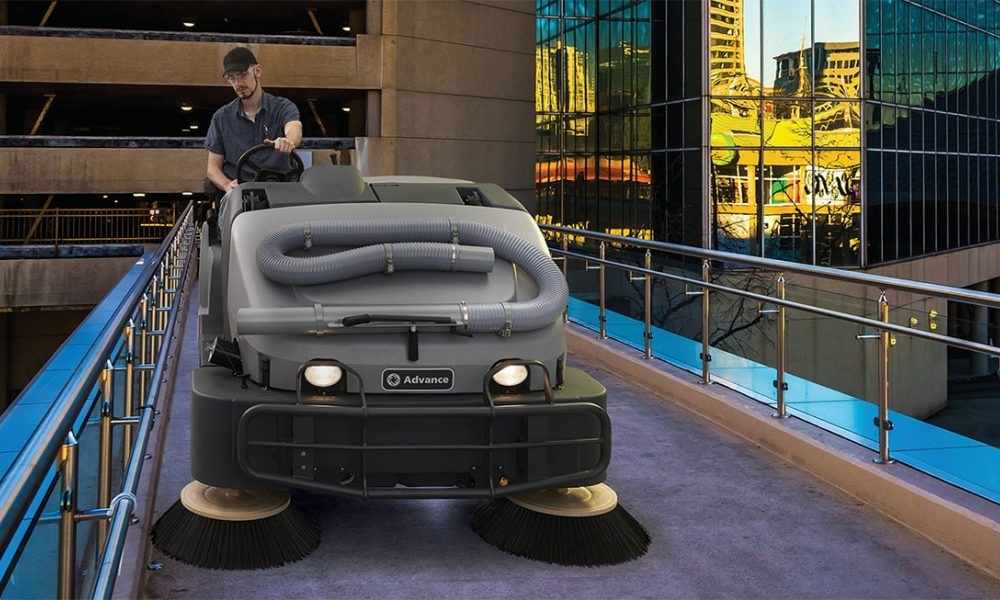
Advance SW8000 Floor Cleaner

At Darr Equipment Co, we believe cleanliness in the work space is conducive to more productive and efficient work. Why? Well, there are several reasons, including:

When employees and visitors see that you care enough about the work area environment to keep it clean, they are themselves more likely to put forth the effort to stay organized and dirt free.

Employees who aren’t continuously worrying about the amount of dust and dirt they are being exposed to are free to concentrate on their job.

Employees are happier when they feel safe from a poor-quality environment - happy employees work harder.

Employees are more likely to be at work if they aren’t having an asthma attack due to poor air quality.

Continue reading
  1421 Hits

Darr The Legacy. The Brand.

Darr Service Technicians

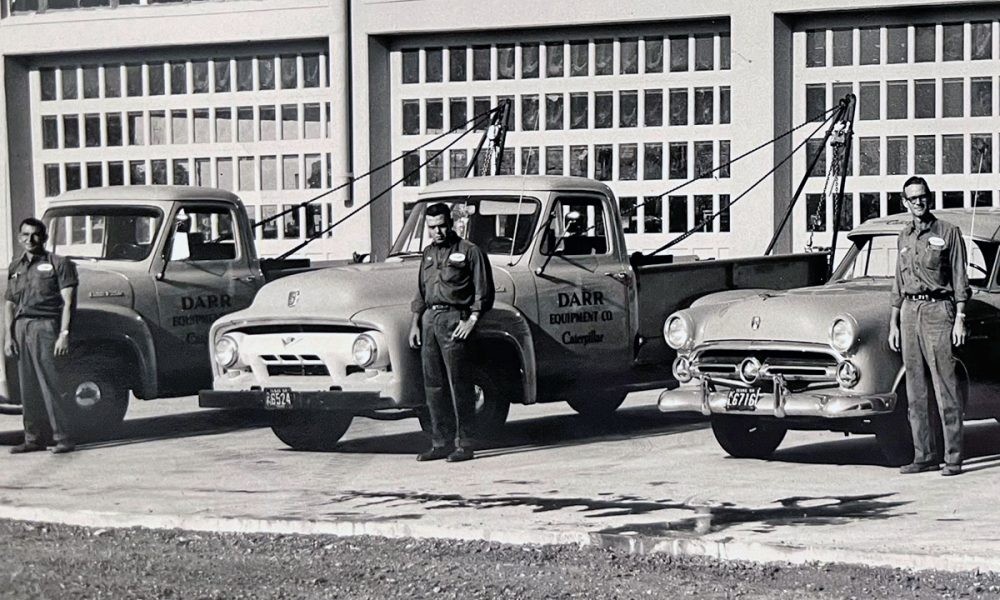
Darr Equipment Co has a rich history dating back to January 1954 when founded by entrepreneur, Hal Darr. The company began as a Caterpillar diesel tractor dealership throughout East and North Texas.

During the 50’s, 60’s 70’s and 80’s the company underwent tremendous growth adding locations both through acquisitions and growth. By the mid-1990s, Darr had grown to 16 facilities and over 1,000 employees with locations throughout Texas, Oklahoma and Louisiana.

There was a close connection between the Caterpillar dealership and Caterpillar Inc, the manufacturer, together making history of paving services and paving machinery. Due to the dealership size and proximity, the company became integral in helping Caterpillar develop new products to meet the growing demand of their customer base.

Darr became the first Caterpillar dealer to be awarded a Cat Lift Truck franchise in 1966. That was the company’s entrance into the material handling marketplace. Utilizing the same customer service business principles, the forklift division continued to expand with best in class material handling equipment and services.

The company once again made history in April of 2002 selling the original Caterpillar diesel tractor dealership portion of the company to the South Texas Caterpillar dealer, Holt Cat. The sale made Holt one of the largest Caterpillar dealers in the world. The family has since become known as owners of the 5-time world champion winners of the San Antonio Spurs, NBA basketball team.

Continue reading
  2359 Hits

Increase Employee Happiness with Improved Equipment Ergonomics

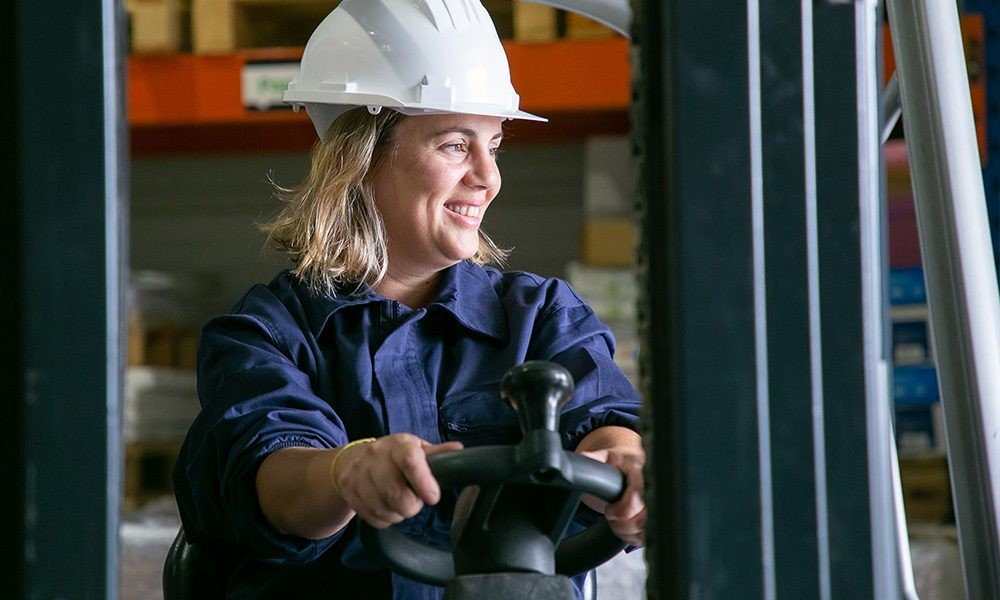
Happy Woman on Forklift

A business can lower costs and boost employee satisfaction and productivity with a proactive workplace ergonomics focus. Ergonomics can be defined as the science of adapting the workplace to the worker, so the worker can do the job most efficiently. The word itself is derived from the Greek language combining the two words: egos (meaning work) and noms (meaning laws). Basically, it’s putting humans first.

In business, even when we factor the worker with the upmost consideration, the job still needs to get done. The goal of ergonomics is not to slow down the progress of business but to fit the job to the worker, prevent injuries and increase happiness. It is understood that operator satisfaction and comfort lead to improved productivity, decreased medical costs, and increased profit. When the operators can function without injury, they are motivated to work harder and more efficiently. After all, a happy employee is a productive employee.

It is a proven fact that workers-operators of any equipment, especially forklifts, increase their efficiency and productivity when there is quality comfort with the equipment being operated. The proper equipment can make a big difference when it comes to health and safety as well as productivity and cost.

According to the Occupational Safety and Health Administration (OSHA), the following are risk factors that contribute to fatigue and injury.

  • Exerting excessive force
  • Performing repetitive tasks
  • Working in awkward postures or the same posture for long periods
  • Localized pressure to a body part
  • Vibration

When there are cold temperatures, these risk factors can be exacerbated. The goal of the business should be to identify and eliminate these risk factors. One of the ways that can be accomplished is through equipment selection.

Continue reading
  1230 Hits

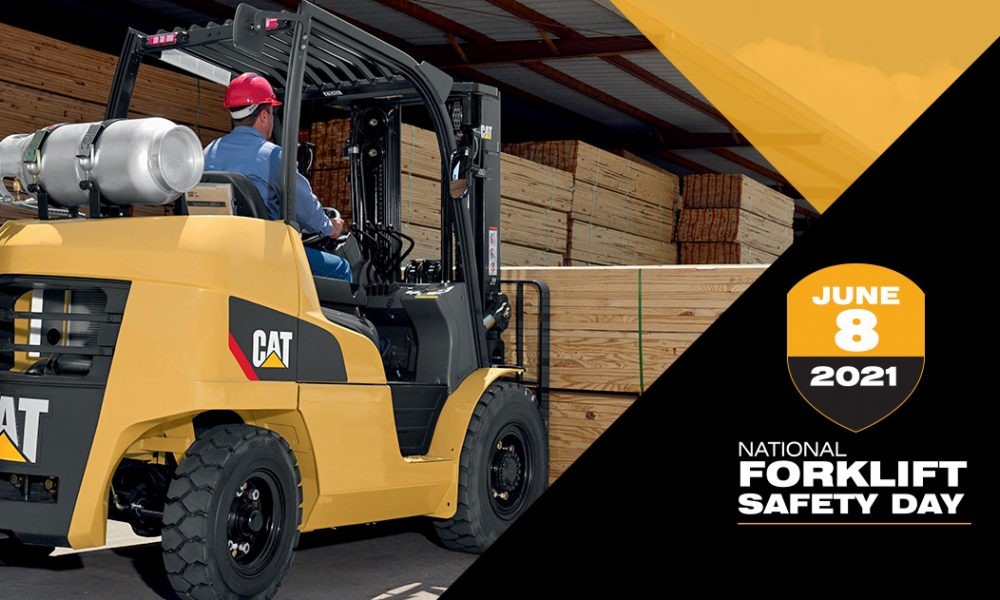
Darr Equipment and National Forklift Safety Day - June 8, 2021

2021 NFSD

With large, heavy equipment comes great responsibility. Darr Equipment Co knows the importance of “safety first,” and that is why we offer OSHA required forklift operator training.

We are proud to support this year’s NFSD (National Forklift Safety Day) and encourage everyone to participate. “National Forklift Safety Day serves as an opportunity for forklift manufacturers and the industry to highlight the safe use of forklifts, the value of operator training, and the need for daily equipment checks.” The esteemed guest list includes speakers from the Industrial Trucking Association and many other industry leaders in material handling manufacturing and warehouse solutions.

[CUTOFF]

According to the Bureau of Labor and Statistics, nearly 100 workers are killed and another 20,000 are seriously injured in forklift-related incidents annually. These alarming numbers mean that one of every ten forklifts in the U.S. will be involved in an accident every year. OSHA reports that 25% of forklift accidents are due to inadequate operator training.

The four main causes of forklift accidents:

Hitting or running over a pedestrian

20 percent of forklift accidents involve a pedestrian. Proper training for all operators and pedestrians, along with other safety solutions can dramatically lower these numbers. Darr’s commitment to safety training includes learning about proper safety measures to keep everyone safe on the work floor.

Continue reading
  990 Hits

Prepare Your Material Handling Equipment for The Long Hot Summer

Darr Service Technician

Spring has sprung, the wildflowers have bloomed, and the summertime heat is just around the bend, which means it’s time to start preparing your material handling equipment and operations to be able to handle the summer time heat.

Forklifts are a big investment and steps are warranted to protect them from undue damage. Employers and managers also have a responsibly to protect employees and equipment from the harsh summertime heat. Here are a few tips to keep your people and material handling equipment in good shape during this year’s summer season.

Chances are you’ve heard of or even possibly have experienced a heat stroke or heat exhaustion due to prolonged exposure to the summertime sun and high temperatures. Make sure to keep your staff well hydrated and where air condition is not to be had utilize fans to ensure a cooler working environment.

Summertime Guide to Prepare Your Forklift to Beat the Heat

It’s always smart to stay on schedule with routine maintenance or planned maintenance for every piece of equipment in your fleet. And summertime to not the season to take a break on inspections and maintenance.

To avoid overheating this summer, make sure to have your material handling equipment’s cooling systems inspected. Make sure that your equipment’s coolant fluid levels are at the correct level. Replace coolant liquids at the manufacturers recommended intervals. Check radiators for any damage or leaks. And check all coolant system hoses for cracks or deterioration.

Continue reading
  1007 Hits

Tips For An Energy Efficient Loading Dock

Warehouse Loading Dock

As the world of material handling turns to electrics power for energy efficacy and a greener environment, there is a gaping hole in most operations’ energy conservation plans - called their loading dock. Most all product-based businesses have a loading dock or docks to deliver or ship raw materials or finished goods to warehouses, distribution centers or the end customer. With some planning and implementation of warehouse products, energy leakage from loading docks can be minimized.

Dock Inspection

One of the first things to do when embarking on an energy efficient warehouse or facility, is to order a loading dock inspection. A dock inspection can reveal many issues for safety and productivity of the dock as well as showcase energy saving solutions. The inspection may find tiny gaps or misaligned areas that need maintenance or installation of energy conservation devices.

Dock Seals

One of the best ways to prevent cold or hot air escaping or entering the building is the installation of dock seals around the dock door. The dock seal is compression based and is fit to cover the sides and top of the dock door. The cushy material creates a seal once the truck or trailer is backed up against it for loading or unloading. A good dock seal can improve energy efficiency as much as 90% during summer months.

Dock Shelter

Just when 90% energy efficiency was sounding pretty good, the reality is that due to the varied sizes and shapes of trucks and trailer utilizing the dock seals, it is difficult to create the “seal.” Another dock product called a dock shelter can create a true air tight seal around the perimeter of the dock door. While dock shelters are more expensive than dock seals, they are more reliable in preventing cold and hot air from escaping depending upon the season. Productivity is also increased with faster loading and unloading with workers focused on complete access to the trailers’ contents from within the shelter.

But Wait There’s More

There is one more opening - the “fourth-side.” Most all dock seal and dock shelters are built and installed on three sides of the dock doors. The bottom is often over looked as what the industry calls the “fourth-side.” Even with dock plates or dock levelers as the flooring between the trailers and warehouse facility, there are gaps and pits of energy escaping. The placement of an under-leveler sealing curtain will help significantly reduce energy loss.

Continue reading
  1360 Hits

Small Space Solutions: Turret Trucks & VNA Warehouse Pallet Racks

Cat Forklift in Warehouse

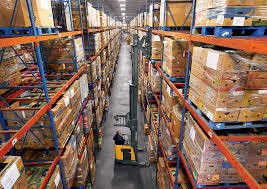
Regardless of your industry, demand for your product could reach all-time highs significantly faster than you might have originally expected. While this may seem like great news for any business, most warehouse managers know that an increase in demand translates to needing more storage space for stocking goods. This means that without the right warehouse design solution, enterprises run the risk of running out of room in their warehouse, resulting in slower fulfillment times. Luckily, very narrow aisle (VNA) solutions exist for this exact scenario, allowing businesses to better fulfill orders as they come in. VNA warehouse designs work by making your aisles as narrow as possible and using tall racking systems so that you can take advantage of every inch of your facility. Keep reading as we explore the two main components of VNA warehousing: turret trucks and specialty VNA warehouse pallet racks.

The Components of VNA Warehousing

The two main elements of any warehouse design include pallet racks (for storage purposes) and the industrial equipment that is required to retrieve and process goods from those racks. For VNA warehouse layouts, turret trucks and specialty warehouse pallet racks are utilized so that you can get the most out of your current facility.

Turret Trucks

A turret truck is made specifically for VNA warehouse configurations, as it is designed to operate in very tight spaces (i.e., the narrow aisles that are characteristic of this type of warehousing). Some of the advantages of utilizing a turret truck include:

· Significantly faster pallet handling in VNA applications, resulting in substantial improvements in warehouse productivity.

· A reduction in operator error (due to better visibility), which leads to fewer accidents and other risks associated with racking damage.

Continue reading
  1297 Hits

Increasing Warehouse Storage Capacity: Used Pallet Racking Options & More

Jungheinrich Narrow Aisle Forklift

When the working storage capacity of a warehouse exceeds the 85 percent utilization level, productivity levels tend to take a dive. This can be attributed to a variety of issues, like extra work caused by the commingling of multiple pallets or SKUs in storage locations, overly congested receiving and shipping docks, and so on. The best way to remedy these problems is to increase your warehouse’s storage capacity, but that doesn’t always have translate to a whole new shelving system. Keep reading as we explore some alternatives for increasing your facility’s storage capacity – from changing your aisle widths to reimagining your existing used pallet racking – and what your options are if you do choose to purchase a new system.

[CUTOFF]

Try Changing Your Operating Aisle Width

A warehouse’s operating aisle widths are determined by a number of factors, including the type of material handling equipment that is being used, the size of the pallets, and the amount of room that is required for vehicles to pass within the aisles. Before you shell out all the cash needed to purchase an entirely new racking system, you should rethink your current aisle widths to see if you can increase your storage capacity that way. Examined below are the three different types of operating aisle widths that you can choose from.

Very Narrow Aisle (VNA)

VNA warehousing usually calls for aisles that are between 72 and 78 inches wide. They require the use of specialized equipment (like turret trucks and specialty order pickers) in order to facilitate proper pallet storage and handling. As its name suggests, very narrow aisles are extremely narrow. This means that only one vehicle can work within an aisle at any given time, which can affect your facility’s operations. VNA configurations are often seen in warehouses that require high storage density solutions or when the variety of products being stored exceeds the number of pick facings that are available at floor level.

Narrow Aisle

Narrow aisles usually clock in at about 108 to 132 inches in width. This type of racking configuration is appropriate for electric vehicles (such as reach trucks). This aisle size can be designed to comfortably accommodate two forklifts at once, allowing for more operational flexibility. The majority of North American facilities utilize narrow operating aisle configurations.

Continue reading
  1428 Hits

Racking Gone Wrong: Poor Used Pallet Racking Practices and More

Heavy duty industrial shelving

When done right, optimizing your warehouse shelving can increase your storage space and improve productivity. There are many options when it comes to purchasing, installing, and maintaining your pallet racking. Unfortunately, with this seemingly endless number of options comes more room for error. Keep reading as we discuss seven of the most commonly made storage mistakes, from choosing a bad layout from the get-go to engaging in poor used pallet racking practices and more.

1. Picking the Wrong Design

There is a whole slew of pallet racking and alternative storage options available to suit various warehousing needs. For example, if your existing space is short on square footage you could opt for very narrow aisle (VNA) pallet racking, which would allow you to store more products in your warehouse. If you need to accommodate exceptionally heavy or oddly shaped loads, however, a cantilever racking system may be a better choice. If you can’t find a readymade system that fits your business’s unique needs, don’t fret. The perfect pallet racking system for your warehouse always exists at Darr Equipment, as we offer fully customized layout and design solutions.

2. Forgetting About the Future

When buying a racking system, it’s crucial that you consider how you might expand in the future. Purchasing only what you need right now could result in you having to buy a brand-new system five years down the road. With accurate planning, you will not need to pay for temporary storage (which can be both expensive and lead to limited efficiency) to meet your storage needs in the future. Your racking should be considered a long-term investment that is designed to grow alongside your business.

3. Not Considering Your Equipment

Purchasing new shelving doesn’t always mean you are buying new equipment. Therefore, you should never forget to take your current material handling machines into account when purchasing your racking system. Failing to consider your existing equipment can put you in a position where you might have to replace your entire fleet – yikes. With that said, some types of racking do require specialty machines (such as VNA pallet racks). Always ensure that you’ve done enough research before you buy your shelving to avoid surprise costs for extra machinery.

4. Assuming Used Pallet Racking is Good as New

Oftentimes, used pallet racking systems do not offer the same quality that you would expect with a new racking system. While used racking does have its perks (i.e., they’re inexpensive and better for the environment), it also has its downfalls. Compromised used pallet racks could result in damage to your goods or equipment and can even create a hazardous environment for your employees. Used racking should only be purchased from a reputable industrial equipment dealer in tip-top condition.

Continue reading
  1273 Hits

Fleet Track Management: Valuable Solutions from a Forklift Service Company

CAT Lift Trucks

Managing a pool of industrial vehicles can be a challenge even in the best of times. Add external influences that managers have little control over – like new legislation, rising costs, and even crises that can affect the supply chain (such as the Coronavirus pandemic) – and fleet management can soon become seemingly impossible. Luckily, there are valuable solutions that forklift service companies can offer to help fleet managers make the task less unwieldy. Many of these solutions involve helpful software that works to coordinate fleet management activities and support the role of the manager. Keep reading as we delve into the purpose and challenges of fleet management, along with how Darr Equipment’s Fleet Track software can set your warehouse up for success.

What is the Purpose of Fleet Management?

Any organization that utilizes industrial equipment requires some form of professional fleet management (delivered by a forklift service company or done in-house) so that they can control the lifecycle of their commercial vehicles and reduce the risk associated with owning a fleet of lift trucks. Fleet management also helps to increase productivity, improve efficiency, and ensure compliance with relevant legislation.

Challenges Faced by Fleet Managers

A fleet manager is responsible for four main areas: vehicle acquisition, equipment maintenance, fuel management, and health/safety. The challenges of each of these key responsibilities are outlined below.

Vehicle Acquisition: Determining the purpose and suitability of vehicles, evaluating changes to vehicle legislation, and negotiating deals with industrial equipment dealers all sit with the fleet manager. Moreover, tax and insurance costs, fuel consumption, resale value, budgetary restrictions, and employee expectations need to be considered when picking the right vehicles for a warehouse. With all of these duties belonging to the fleet manager, it’s easy to see why their role can be difficult.

Equipment Maintenance: Fleet managers are also tasked with overseeing the fleet’s maintenance program. This includes pre-purchase inspections, regular vehicle check-ups, and performing any necessary forklift service and repairs.

Continue reading
  1332 Hits

Ways to Streamline Processes by Using a Warehouse Order Picker

Narrow Aisle Forklifts

Because today’s consumers have become increasingly accustomed to receiving their goods extremely fast, businesses of all sizes – from mom-and-pop shops to large corporations – need to streamline their order picking practices in order to deliver products in the most efficient manner possible. This is especially true for enterprises that rely on warehouse staff or automated equipment to fulfill orders.

So, what exactly does order picking entail?

Order picking is essentially the labor required to pull an item from inventory to fulfill a customer’s order. While this may seem like an easy procedure, you might be surprised to learn that an average of 55 percent of operational costs in distribution centers are focused on order picking. In other words, warehouses with ineffective systems could halt further innovation, stunting company growth. On the flip side, when you successfully streamline your business’s order picking methodology, you can offer faster fulfillment times to your customers, promote accuracy in your orders, minimize costs, and much more. Keep reading as we delve into how to strategically approach order picking and some of the best warehouse order picker practices for improving productivity in your facility.

Types of Order Picking Strategies

While every organization has its own unique fulfillment requirements, there are some popular frameworks that exist that you can use as a guide when customizing your own order picking strategy, which are outlined below.

Zone Picking

Zone picking is used when a warehouse is compiling orders that contain multiple components and to reduce walk times for pickers. The inventory is arranged into “zones” where each warehouse order picker deals only with the unique SKUs found in their zone.

Continue reading
  1266 Hits

How to Fix 3 Common Forklift Repair Issues

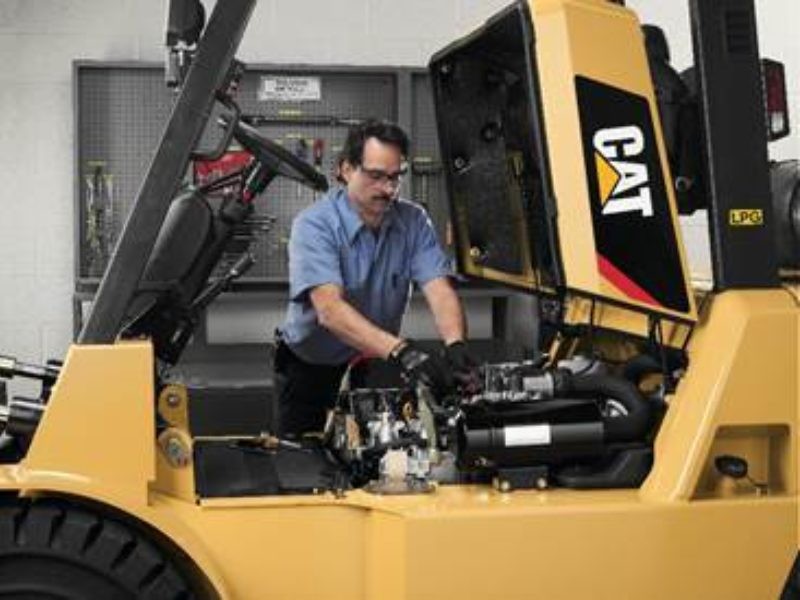
Darr Forklift Service Technician

Forklifts are the workhorses of the material handling industry – and rightfully so. Their popularity can be attributed to their versatility and durability. While they can be used for many applications and serve a wide array of purposes, a lift truck’s most important job is to efficiently transfer products from one location to another. While modern-day forklifts are sturdy machines, there are still a lot of moving parts involved. With the large loads and heavy usage that these lift trucks are expected to handle, it only makes sense that forklift repair and maintenance is necessary with such a powerful piece of equipment. Read on as we discuss how to repair the three most common issues with forklifts.

Common Forklift Repair Issues

The general rule of thumb regarding forklift troubleshooting is that you should always repair your forklifts as soon as you notice a problem. While it might be easy to put off fixing minor issues in a busy warehouse environment, it is not a wise decision, as delaying repairs can exacerbate the problem, resulting in more expensive repair costs, extra downtime for your machine, and even hazardous conditions for operators. Even if only one part of your lift truck is not functioning properly, it can quickly lead to issues in other areas of your forklift. Outlined below are three common problems and how to address each one.

Steering Problems

Forklifts can be difficult to maneuver at times (especially in tight spaces), making it extremely important to keep the steering functioning smoothly. With that said, it’s not always easy to spot an issue with the steering. One of the warning signs you can look out for is strange sounds that occur when turning the vehicle. These noises can indicate an issue with the hydraulics that regulate the steering pressure or rust in the steering mechanism. Other steering issues include:

· Worn gears

· Loose or worn out pressure valves

Continue reading
  1935 Hits

Winter Forklift Maintenance Tips

Kalmar Industrial Forklift

Winter is coming – is your lift truck ready? While most warehouse managers understand the importance of regular forklift maintenance, not all of them remember to take extra care of their fleet when the colder months come rolling in. Regardless of whether you choose to let a forklift service company take care of your heavy machinery or prefer to do it in-house, there are some essential pre-season maintenance tasks that you should perform. These tasks are extremely vital, as they can protect your business from unexpected downtime, repair bills, and employee injuries.

Winter Prep Checklist

With the joys of the Winter holidays comes the reality of harsher outdoor conditions. Outlined below are several key areas that you should keep an eye on this season to keep your vehicle in tip-top shape.

Battery

When it comes to taking care of your forklift’s battery, you should start by using a load tester to check that the battery is close to its maximum strength. You should also clean the cables and check them for any damage. If your battery is near the end of its life, it might even be cheaper to proactively replace it to avoid unnecessary downtime instead of having the battery give out unexpectedly mid-shift. It is also important to be aware of the fact that batteries tend to discharge more quickly in extremely cold temperatures.

Cooling System & Antifreeze

Because your forklifts will be exposed to extreme conditions, be sure to check your antifreeze and coolant levels with a hydrometer to ensure that there is enough fluid. It’s also a good idea to inspect hoses and other key components for leaks or damage.

Tires

Wintertime is synonymous with low tire pressure, so be sure to check your fleet’s tires for proper air pressure (for pneumatic tires). You should also make sure that the treads on your tires are deep enough to maintain adequate traction on outdoor surfaces.

Continue reading
  1327 Hits

A Look at a Manual Versus Electric High Lift Pallet Jack

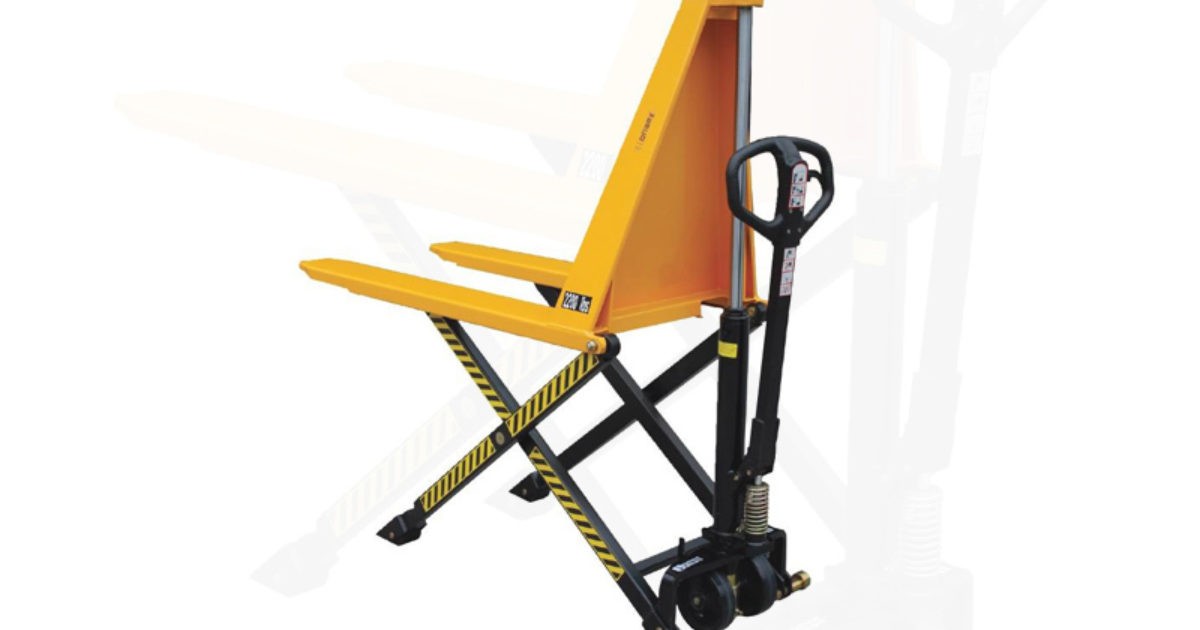
High Lift Pallet Jack

If you are in the market for a high lift pallet jack, you need to understand the different types available for purchase before you actually buy. The two types of pallet jacks include manual and electric, and both have their own pros and cons. Because the price difference between these two types of pallet jacks is quite substantial, you will want to make sure that you evaluate all of the specs so you know which one is right for your specific application. Keep reading as we take a look at some of the features you should consider when deciding between an electric versus manual pallet jack.

Major Considerations

Before even looking at the details of a manual versus electric high lift pallet jack, it is important to consider the size of your workspace, how you plan to use the pallet jack, and what you can afford.

The Size of the Facility

An electric model is usually better suited for larger facilities, as manually transporting large pallets across a large space can be draining for employees. Small warehouses, on the other hand, usually call for manual pallet jacks because they are easier to maneuver in tight spaces than their electric counterparts.

Application Requirements

If you need your pallet jack to move large stacks of pallets, opt for an electric model. Electric pallet jacks usually boast a better design for easier lifting capabilities. Manual models tend to work better for lifting smaller loads.

Budget Limitations

While it might cost more initially to buy an electric high lift pallet jack, you must also consider the other costs associated with investing in industrial equipment. The following factors should be evaluated when purchasing a pallet jack so that you know what you can and cannot afford in the short- and long-term.

Continue reading
  1599 Hits

3 Things to Check Before Purchasing Used Pallet Racking

Narrow Aisle Forklift in Warehouse

Used pallet racking is incredibly cost-effective and even good for the environment, as it reduces the amount of resources and emissions required to produce a new racking unit. However, if you have plans to order secondhand shelving from an industrial equipment dealer, be sure check the condition of the racking prior to purchasing. This is mainly because used racking can create hazardous situations in your warehouse if it is in poor condition. In order to determine if the used racking is conducive to a safe working environment, it is important to look at the amount of rust on the unit, damage to any beams, and the integrity of the uprights. Read on as we explain when to accept and when to reject a racking system by evaluating these three factors.

Rust

A rusty component should always be evaluated to ensure that the rust does not affect the structural strength of the used racking.

When to Accept:

Used pallet racking can accumulate surface rust if it is exposed to humid environments or the paint fails. As long as you don’t mind the lackluster aesthetics of it, it is okay to buy pallet racking with surface rust, as it has no impact on the structural integrity of the racking.

When to Reject:

While a little surface rust is harmless, a racking unit that has major pits and holes in it from advanced rust could cause serious accidents in your warehouse. Advanced rust is oxidation below the surface, which means the steel’s strength is compromised. Also, in some cases, rust patches form around points where repairs have been made and could indicate the quality of that repair.


Continue reading
  1181 Hits